
A guide with best practices for managing Remote Squads
By Roque Sales, CX & UX Manager at Zappts

When we need to ensure operations continue remotely, it takes effort, patience and above all, creativity.
Designing a coordinated operation with fluid communication and the right tools can be a challenge.
Managing Remote Squads requires a lot of curiosity from management. Managing a Remote Development Squad is one of the most urgent concerns for IT leadership.
That’s why I’ve gathered some information that helps a lot in this transition from off to online.
Remote Squads – from concept to application: that’s what you’ll see in this article!
Remote Squads
Statista, one of the world’s most accessed statistical databases, published an interesting survey. It highlights that approximately two-thirds of software development companies have migrated to the Remote Squads model.
In a market as accelerated as IT, it is vital to keep the team at maximum efficiency, including remotely.
As a result, there are numerous advantages of working with Remote Squads:
- You can scale project delivery capacity;
- Accelerate your organization’s Digital Transformation;
- Expand your company’s area of operation;
- Hire qualified professionals from anywhere, increasing the diversity and range of capabilities in your team.
The big challenge is managing a remote team and ensuring the quality of deliveries to clients. So, if you’re wondering how to make the most of your team’s potential, I have good news!
In this article, I’ve put together a series of tips and tools for managing Remote Squads effectively and successfully. Let’s go!
Managing Remote Squads
Here at Zappts, we have been increasingly evolving the development model for innovative information technology solutions.
Quality deliveries with speed to meet strategic business demands. From this demand, we created a development model that uses the best practices and tools on the market.
For this model to work, it is necessary to ensure the formation and consolidation of 3 fundamental pillars: Culture, Processes and Tools.
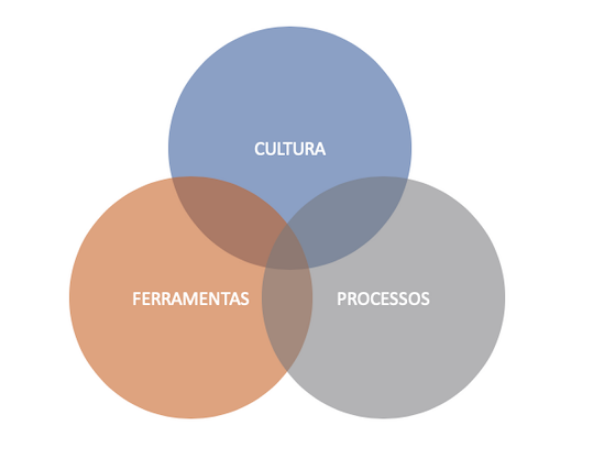
Culture
Culture is one of the main pillars that ensures the success of the model. The most important thing is that the team has the same motivation, vision and engagement in achieving results.
It is essential that everyone involved in the model lives the same culture for adherence and process evolution.
The importance of organizational culture is a topic increasingly discussed in the market.
Companies like Google are famous for having a strong internal culture. This aspect reveals a lot about the importance of organizational culture not only within organizations, but in the entire market.
The principles for applying organizational culture are:
- Transparency;
- Clear Communication;
- Alignment of Goals and Expectations;
- Autonomy;
- Responsibility;
- Commitment;
- Trust.
Processes
This pillar is of fundamental importance to ensure the continuity and evolution of the project management model.
Adherence to defined processes ensures that quality, motivation and engagement of those involved are maintained. From conception to delivery of the final product.
Agile Framework/Scrum
The Agile Development methodology enables continuous planning, as well as continuous testing and integration, and this provides:
- Fast value delivery for the business;
- Quick response to unforeseen events and changes;
- Customer collaboration;
- Integration between people;
- Increased productivity;
- Investment optimization;
- Increased launch speed.
Allocating Remote Squads
For a model of continuous deliveries, the allocation of Agile Squads is the most recommended for End-to-End solutions.
Management is done by the technology partner. In a transparent way, it is necessary to eliminate the complexity and bureaucracy of individual resource administration. This enables greater speed and development scalability.
Capacity Model
The Agile Squad in a Capacity Model is designed to meet continuous demands for value delivery to the customer. It involves varying levels of solution architecture, development, user experience, quality control and delivery management.
The Squad is customizable and can change depending on requirements and demand. It stays together and matures with the progression of demand. As a result, it maintains a flow of Continuous Deliveries and ensures retention of technological knowledge.
Tools
If you’ve worked with Remote Squads, you’ve certainly encountered some communication challenge. You send an email, wait, wait a little more, and then, finally, get a response.
Often the response doesn’t come with the necessary or expected information. With that, you feel like they don’t understand you.
See, this happens even with local teams, but at least with them, you can go and talk in person.
Learning to manage remote teams boils down to the same principles as a local team. The only difference is that you need to rely on technology as your main ally in daily communications.
Although it’s not as easy as going to the person’s desk, with the right tools, it is possible to solve this issue.
And these are my favorite tools:
Jira
Jira is a complete set of tools for Agile Project Management.
With resources for planning and demand analysis, it allows defining clear objectives and tracking their progress. Jira is highly customizable and works for any of the Agile Methodologies.
There are other excellent tools for activity management. Honorable mention to Trello, which offers an excellent package of functionalities for free. Trello meets the activity management needs of Remote Squads very well.
Confluence
Confluence is a powerful collaborative document management system. It enables viewing and editing of documents shared by multiple people simultaneously.
It works for projects of all sizes and interfaces perfectly with Jira. As a result, it enables relating documents to various artifacts, such as user stories, epics, bugs, etc.
XRay
XRay is a test management tool that integrates directly with Jira.
With development and testing teams working in the same tool, it manages and controls the testing process in homologation. XRay can integrate automated testing tools, including Cucumber, Selenium and Junit.
Slack and Zoom
Slack and Zoom are excellent applications for keeping the team connected.
Slack is a set of team collaboration software tools and cloud-based online services. It is the favorite of development teams for being a friendly platform with diverse resources.
Zoom has the ease of video and audio calls in a simple and objective way.
Some other widely used alternatives are Hangouts and Whereby.
Another very interesting tool for team communication is Discord.
Created for the Gamer community, it proves to be super effective for facilitating communication between teams. Discord offers the advantage of simulating physical spaces to keep interaction between Squad members closer.
Therefore, you can choose one or more of these tools. Regardless of the solution used, the important thing is that Remote Squad members are always connected.

The advantages of working with Remote Squads
Adopting a remote work model allows companies to absorb more projects in an agile and scalable way.
Among the advantages of working with a remote team we can highlight:
- Scalability;
- Agility in hiring and ramp-up of development teams;
- Resource savings;
- Possibility of working with partners and professionals from various places;
- Diversity of ideas, competencies and experiences;
- Greater focus on deliveries;
- Low interference and noise;
- High productivity.
Important aspects about team productivity
Use Scrum for the team
Choosing an agile work model like the Scrum Framework allows a range of tools. Therefore, using Scrum for the team and the business is a great insight.
Track activities: Daily Meetings
Again, communication is the key to success in development. This applies to any type of group effort and even more so for our remote team.
By ensuring that all team members talk daily, we keep information flowing so everyone knows what is being worked on and how each person is collaborating.
Ensure goals: Sprint Planning
Planning is the foundation for any type of business. Planning sprint activities is vital for team success and good project progress.
Feedback: Sprint Retrospective
One of the most important rituals of a sprint, the Retrospective is fundamental for setting the tone. In other words, to correct, adjust and recognize the team’s work.
Thus, the team gains maturity, confidence, sense of urgency and commitment to the client and the team. Exercising these variables stimulates transparency and strengthens the quality of communication.
Energy and motivation
Now that we know how to interact effectively with our Remote Squad, it is essential to keep the team motivated.
And what can we do to ensure this? How to enhance the qualities and advantages that your Squad can offer?
The answer is simple: remember the human factor. Despite connecting virtually, the Squad is made up of real people and they need to be properly managed and motivated.
We can do this the same way we do with our local teams.
If you know how to manage locally, your techniques apply here too, with some modifications.
Some team members may be in a different time zone, have a different culture and speak a different language. That’s the magic of diversity.
And to motivate our Remote Squad we can follow some principles:
Set goals
It is essential to set clear and actionable goals for all Squad members.
If you don’t set concrete expectations, you shouldn’t expect concrete results.
Promote team feeling
Remote professionals are more than mere suppliers; they are an integral part of your development operations. It is essential to ensure Team Feeling.
Recognition
People crave recognition and a successful remote team needs to be recognized just as much as any other.
When developers deliver something particularly impressive or achieve the goal ahead of schedule, congratulate them, individually and collectively!
Share the company’s goals and objectives
Probably, your developers and remote teams don’t have the same knowledge about your business as you do. So, share with them about the company’s goals and objectives!
If your project goes well, your remote team should gain recognition and rewards like you. The members of your Remote Squad need to know that they are also part of this success!
Our Challenges: Common problems and how to avoid them!
I’ll list some challenges that may arise when working with Remote Squads and the possibilities of solutions for each situation. Let’s go!
Lack of Transparency
Challenge: your remote team is a black box: you provide instructions and get the code back? You don’t know what happens in the middle of processes and fear that there are hidden problems?
Solution: have a well-implemented DevOps process. Well-structured QA and Compliance processes and ensure the occurrence of Peer Review. If teams check each other’s work as it should be done, this will never be a problem.
The project doesn’t match expectations
Challenge: everything seems to be going well, but when you reach a development milestone, the result is not what was expected. Key features may be missing or they may be doing something you never asked for. The point is that it’s not exactly what the customer wanted.
Solution: again, ensuring that Scrum processes work is fundamental to address this challenge. Well-written Stories, well-performed Grooming and a well-defined sprint vision. All of this will be of utmost importance for the success of the project.
Lack of Communication
Challenge: despite your careful instructions, your local and remote teams simply don’t work together. Maybe the work is done any way and it’s known that it could be much more efficient if they worked together. Information requests go unanswered or are misinterpreted. Work is being duplicated and managers are pulling their hair out.
Solution: stick to agile ceremonies. Scrum is built from the ground up to facilitate communication, and especially in remote teams, they are incredibly effective. Communication is the most critical factor for success.
We should not make assumptions. We should ask many questions to understand and be understood, creating an open environment for the team to speak openly. It is essential to encourage everyone’s participation, regardless of their experience or position.
Slowness
Challenge: “Everyone is so slow!” or “The emails go into a black hole. We get the impression that the project doesn’t have the proper priority from the development team. They have talent and the work is good when it finally arrives. However, the journey is so arduous and clients are starting to ask about delays.”
Solution: here, Scrum is fundamental. Metrics and indicators are monitoring tools and the process is one of the pillars for the model’s operation. It is essential to promote an environment for all team members, remote or local.
Using team-building techniques and visiting remote facilities are very important actions.
Conclusion
Effective management of Remote Squads is a real and immediate challenge. It involves ensuring delivery quality, process optimization and making the most of the team’s potential.
However, with a solid culture, well-defined processes and the right tools, success will be much closer!
Of course, to achieve all this, you need to take the first step. Choosing the ideal development partner will be the determining factor.
After all, the goal is to enjoy all the advantages of working with Remote Squads, right?
If you are looking for a partnership in your Digital Transformation journey or in the Development of Digital Solutions, count on us! Get to know Zappts better. We will show the way to the success of your Technology and Digital Transformation projects.
I hope you enjoyed this article. Share it with your friends and see you next time!

Share this article
Related articles

16 set 2026
The End of Passive SaaS: Why You’ll Pay for Outcomes, Not Seats
The traditional software pricing model based on per-user licenses (seat-based SaaS) faces an inevitable decline in 2026.

09 set 2026
The Timid Autonomy Dilemma: Why Keeping AI in a Suggestion-Only Role Is Killing Your Margins
This article analyzes the financial impact of this "timid autonomy" and advocates for an urgent shift to the "Human-on-the-loop" (HOTL) model.

02 set 2026
The "SaaSocalypse" is actually an architecture and identity crisis.
This article reverse-engineers a real-world success story (anonymized) from the financial sector, dissecting the layers of...