About Diversity
Why diversity policies in companies matter more than changing your profile picture on social media?
28 de junho de 2021
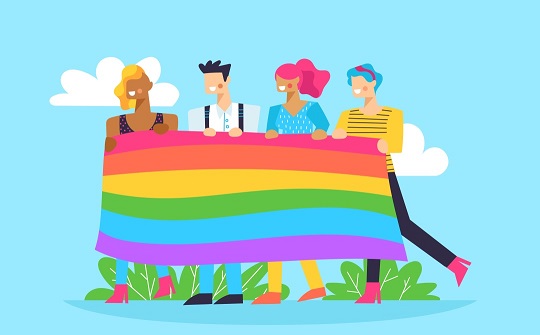
In June, a month of celebrating the pride and visibility of the LGBTQIA+ community, many companies change their profile picture to rainbow colors to symbolize their support for the cause.
But do most brands really care about the inclusion of the community in the job market?
In this article, we will discuss this topic, demonstrating how the development and implementation of diversity policies make much more difference than simply changing the logo on social media.
June 28 is marked as International LGBTQIA+ Pride Day. The date marks the struggle for the rights of the community worldwide, and originated from demonstrations that took place in 1969 in the USA.
Known as the Stonewall Rebellion, the demonstration gave strength to the community in the fight against homophobia.
The purpose of this occasion, just like in various representations that happen annually around the world, is to raise awareness among the population about the importance of building a society free of prejudice when the subject is sexual orientation.
Many people still confuse what “gender” is with what “sexual orientation” is, so let’s clarify.
Gender refers to characteristics belonging to and differentiating between femininity and masculinity.
These characteristics can include biological sex, for example: the state of being male, female, or an intersex variation.
Sexual orientation is how a person identifies, indicating which sexes or genders they are attracted to, whether physically, romantically, and/or emotionally.
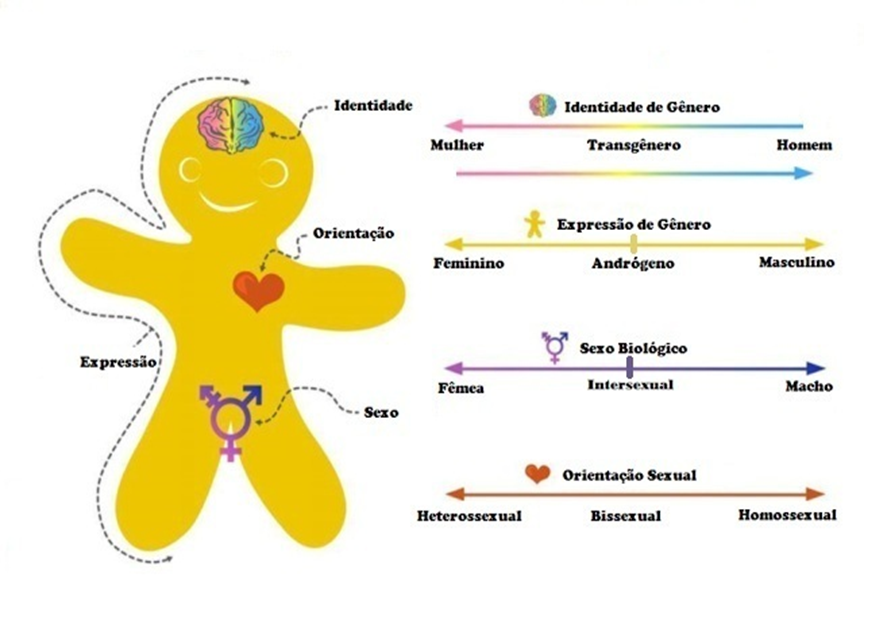
And the LGBTQIA+ acronym, what does it mean? Our diversity committee explains:
L, G, B: these first three letters address sexual orientation. L refers to lesbians and G to gays, that is, women and men, respectively, who feel affective and/or sexual attraction to people of the same gender. B includes bisexual people, who have this attraction to both genders.
T: this letter covers gender identities, including transgender, transsexual, and travesti people. These people identify with a gender different from the one assigned at birth. Furthermore, it is the opposite of cisgender, which are men and women who recognize themselves according to their birth gender.
Q: Q stands for queer, which are people who transition between female and male genders or who do not follow male-female binarity (non-binary).
I: I refers to intersex, which are people whose bodily sexual development is non-binary, so it does not fit the male-female logic.
A: A refers to the Ace community, which represents a range of unique experiences in terms of sexual and affective attraction. A also addresses asexual people, who do not feel sexual attraction to another person, despite affective attraction still existing.
+: Represents all the numerous other possibilities of sexual orientation and gender identity. An example are pansexuals, those who feel affective-sexual attraction regardless of gender identity.
It is undeniable that in recent years it has become a trend to change corporate social media profile pictures in June to rainbow colors as a sign of support for LGBTQIA+ visibility.
However, this alone is not enough to combat LGBTphobia, and for the LGBTQIA+ community to feel represented by companies and included in the job market.
Companies that do not develop diversity policies for the inclusion of this audience are doing more of the same.
The creation of diversity indices that quantify the degree of inclusion of this audience is necessary when a company truly cares about the topic.
Inclusion in the job market presents itself as one of the greatest challenges faced by the community.
According to a survey conducted by LinkedIn, half of Brazilian LGBTQIA+ workers have already openly disclosed their sexual orientation at work.
The survey revealed that the other half, who have not yet disclosed their sexual orientation at work, have the following reasons for not sharing: 51% do not see the need, 37% do not like to talk about their personal life, and 22% fear retaliation from colleagues.
The data don’t lie, and the study statistics reveal the importance of discussing the topic.
In another survey, conducted by the Center for Talent Innovation, an alarming figure is revealed: one third (33%) of Brazilian companies would not hire LGBTQIA+ people for leadership positions.
A simple change in appearance for an LGBTQIA+ person can become a concern when they do not feel comfortable and welcomed at the company where they work.
A short haircut or unconventional use of hair, for a non-heterosexual woman for example, can be a reason for prejudice among colleagues, and even justify “non-alignment with the intended corporate appearance.”
This can generate fears and insecurities about job retention, or respect among peers.
That is why we believe that, rather than changing the profile picture on social media, we should create diversity policies that increase the inclusion rates of the LGBTQIA+ community, as well as other minority groups in our society, such as Black people, women, and people with disabilities.
Here at Zappts, for example, we created a job referral program with special benefits for those who refer professionals belonging to the group.
People who refer candidates for positions who, upon being hired, identify with the LGBTQIA+ community, receive a financial benefit in return.
We know that much still needs to be done, but it is already a start when we talk about inclusion in the job market, especially in the information technology market, for LGBTQIA+ people.
Talking openly about this topic is no longer an option for companies, but an obligation, at least for those that are truly responsible.
Addressing the topic cannot be done only during the month of June, but throughout the entire year, involving all people in the company.
Changing the profile picture on social media is indeed important, but without a doubt the creation of inclusion indices linked to diversity policies makes much more difference.
This publication was developed by Bruna Cortes, Quality Analyst at Zappts.
Want to know if we have job opportunities for you? We do! Check out our jobs page, clicking here.
Share this article
Related articles

16 set 2026
The End of Passive SaaS: Why You’ll Pay for Outcomes, Not Seats
The traditional software pricing model based on per-user licenses (seat-based SaaS) faces an inevitable decline in 2026.

09 set 2026
The Timid Autonomy Dilemma: Why Keeping AI in a Suggestion-Only Role Is Killing Your Margins
This article analyzes the financial impact of this "timid autonomy" and advocates for an urgent shift to the "Human-on-the-loop" (HOTL) model.

02 set 2026
The "SaaSocalypse" is actually an architecture and identity crisis.
This article reverse-engineers a real-world success story (anonymized) from the financial sector, dissecting the layers of...