
Management 3.0
Happiness at work with Management 3.0 — How is it working for me?
26 de maio de 2020
Happiness at work with Management 3.0 — How is it working for me?
By Luciano Osorio – Scrum Master at Zappts

I’m Luciano, Scrum Master at Zappts, and I’ve worked in many companies (from giants to smaller ones), and I’ve also worked for many clients in different business areas (healthcare, banking, retail, automotive, etc).
I started as a programmer and over 10 years gradually moved into leadership and management roles. Initially, I was trained in traditional management practices and then moved to Agile.
This is the story of how I managed to find happiness in my work as a manager, how it spread, and how it’s making my teams deliver excellent products.
Waking Up
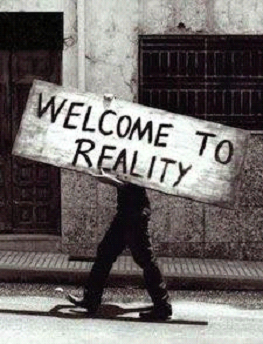
There are many theories, books, and management tools out there. But it’s rare to find one that slaps you in the face with the fact that the management problem is probably the most obvious one: the manager! In other words, it’s all about you.
Cruel? Maybe. True? Absolutely! At least in my case. Why? As a manager, I was trained to expect the worst from people, to control everything in detail, and to deal with people as if they were machines.
If someone needs to improve in some aspect of their work, just move a lever (complain about some behavior, my version of providing feedback), and voilà: the change is done! The bad behavior disappears and then… well… I learned the hard way that this isn’t true.
I was lost in a world of charts, projects, reports, micro-management, underperforming teams, high expenses, lack of purpose, and many other signs that I wasn’t really doing a good job.
How was that possible? I knew the practices (CMMI, ITIL, and other acronyms, not to mention Agile). I knew the metrics, the tools… So, what could be wrong? Well… Everything in my mind.
It took me some years to discover and accept this. A project is not only formed by practices, metrics, and tools. Yes, of course all of that helps, but a project involves people working with a purpose.
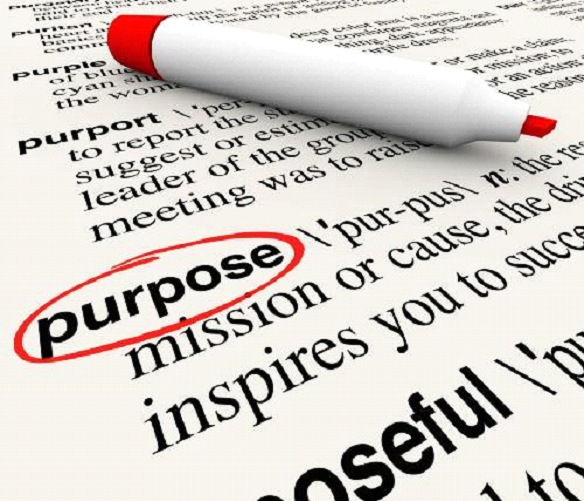
Back to the PMI (Project Management Institute) definition of a project:
A project is a temporary effort undertaken to create a unique product, service, or result.
In other words, a project exists to fulfill an objective or purpose, and a product, service, or result are necessarily created by people who are aligned with that purpose. And this is where the magic happens!
I received Management 3.0 training too early, to be honest, and since I was just starting my experience as a manager at that time, I didn’t know, and couldn’t predict how it would impact my career in the future. So, I put it on the shelf of my brain labeled “for, maybe, use in the future”.
The future became the present and after discovering the problems mentioned before, I did my professional retrospective and remembered that training. Looking at the Management 3.0 practices more carefully, I started to ask…
What can I do to have a purpose in my work? How can I communicate that purpose? How can I make my team become infected by that purpose?
Everything made sense when I read:
“Manage the system, not the people”.
For people to feel involved, buy into the proposal, and believe in it, the entire environment where they are must exude its purpose. And I’m not talking about posters on the wall, t-shirts with catchy phrases, etc. I’m talking about values.
Taking Action

What steps did I take? I’ll illustrate each of them with the most inspiring and fun videos by Jurgen Appelo (except the second one, which I got from the Management 3.0 website).
Get to know the people: Personal Maps
Feedback: It helped me get closer to the team, understand their stories, how they ended up working with me, and what interests we have in common. It really helped me start conversations and build relationships.
Understand what people value most: Moving Motivators
Feedback: It made clear how to approach each team member to discuss the challenges to solve and how each person’s role fits into those challenges. The exercise itself was used as a starting point for 1-on-1 meetings that resulted in goals to be achieved in the coming periods.
Celebrate what was accomplished: Celebration Grids
Feedback: It provides clear visibility during retrospectives of what was accomplished (big or small things), and which practices led to those results. It also helped me answer retrospective questions (what should I keep, change, or stop?) and create realistic action plans for the next iterations.
Encourage recognition: Kudos Box
Feedback: In my case, the Kudos Wall created the opportunity for people to thank each other for help, teachings, and support received during the last iteration. It’s incredible how small things you do can have enormous value for someone on the team.
Be transparent: Happiness Door
Feedback: It created the opportunity to provide and receive quick feedback on daily work and measure team happiness. Together with quick actions to change what’s making them unhappy, it created a trusted environment where team members feel they can bring more serious and challenging matters to be addressed, which sometimes affect their personal lives.
Provide honest feedback: Feedback Wraps
Feedback: A very structured, easy, and effective way to give feedback. It doesn’t allow us to give mechanical, valueless feedback. It’s a very structured way to open up your feelings about something, supported by evidence and examples of what you expect as a solution. Therefore, the other person will have plenty of material to assimilate the feedback and carry out the necessary actions.
The practices above created an environment where there is trust and people are working with purpose and are happy. And when the team is happy, it is committed to quality, deadlines, costs, and thus delivers a better product that improves over time.
Keep the action going…
My Management 3.0 journey is not over. Will it ever end?
There are practices I haven’t tried yet, and given the excellent results from the ones I mentioned earlier, I can barely wait to start them.
So, here are the practices on my “Let’s do this” list:
- OKRs – Objectives and Key Results (this will be the next one)
- Delegation Poker
- Exploration Days
- Merit Money (I’m very excited about this practice!)
The full set of practices is listed here. Give it a try, see how work can be fun, and bring happiness to you too!
Did you enjoy learning about Management 3.0?
Keep following the Zappts blog to learn more about team management and also check out our content on Scrum, Digital Transformation and many other topics!
Also check out job opportunities at Zappts and come join our team! https://zappts.com.br/carreiras/
I’ll stop here. See you in the next article!
Share this article
Related articles

16 set 2026
The End of Passive SaaS: Why You’ll Pay for Outcomes, Not Seats
The traditional software pricing model based on per-user licenses (seat-based SaaS) faces an inevitable decline in 2026.

09 set 2026
The Timid Autonomy Dilemma: Why Keeping AI in a Suggestion-Only Role Is Killing Your Margins
This article analyzes the financial impact of this "timid autonomy" and advocates for an urgent shift to the "Human-on-the-loop" (HOTL) model.

02 set 2026
The "SaaSocalypse" is actually an architecture and identity crisis.
This article reverse-engineers a real-world success story (anonymized) from the financial sector, dissecting the layers of...