
User Experience (UX) and Artificial Intelligence (AI) in Digital Products: A User-Centered Design Approach
Learn how the User-Centered Design (UCD) approach can optimize user experience in the application of AI in digital products, exploring context, interaction and trust.
26 de julho de 2023
Introduction
Artificial intelligence (AI) has been revolutionizing technology, driving the development of innovative digital products and services. However, to ensure that AI reaches its full potential, it is essential to incorporate a solid user experience (UX) into its integration. In this article, we will explore how the User-Centered Design (UCD) approach can optimize user experience in the application of AI in digital products.
The Concept of Artificial Intelligence and its Relationship with User Experience
Artificial intelligence is a fascinating field that dates back to 1955, when the term was coined to describe the ability of machines to behave intelligently. Since then, the definition of AI has evolved and adapted to various interpretations. However, a widely accepted definition emphasizes the automation of tasks that require human intelligence. Other definitions for the term include the idea that AI involves technologies that discover insights without human intervention, inference mechanisms that calculate appropriate actions, and any machine capable of learning.
Today’s AI applications can perform tasks that were previously difficult or required great human effort, such as automatic translation, data analysis, and virtual assistants. The emergence of AI is intrinsically linked to the growth of User Experience, and both have been influenced by the work of psychologists who became computer scientists.
Here, we enter the crucial role of user experience (UX). UX aims to provide a holistic and positive experience to the user, encompassing aspects beyond functionality, such as ease of use and overall perception. The success of AI in products is intrinsically linked to how users interact with and perceive these technologies. Therefore, a well-defined UX approach is essential for the future development and dissemination of AI.
Applying UX principles in the design and development of AI application interfaces is essential to ensure the success and future acceptance of AI. Furthermore, there is the importance of considering user experience from the early stages of AI product development, to ensure that its functionalities are useful, accessible, and understandable for users.
AI and UX – Parallel Journeys
The disciplines of AI and UX have distinct origins, but share important lessons that have shaped their development. While UX emerged as a modern discipline related to human-computer interaction, AI progressed based on technological advances.
UX is a discipline that has existed for decades, but only recently began to receive the significant attention it deserves. It evolved over time, shifting from an initial focus on usability to considering the holistic user experience. Norman and other UX pioneers created the basic principles that continue to be relevant for AI today.
AI, on the other hand, had its ups and downs over the decades. It went through periods of excessive optimism, known as “AI winters,” when expectations outpaced the reality of available technology. However, the situation changed significantly in recent years, with notable advances in machine learning and other subfields of AI. These advances were driven by increased data availability, computing power, and more sophisticated algorithms.
The intersection between AI and UX is where true innovation happens. AI enables the creation of virtual assistants and intelligent systems that interact with users in a personalized and effective way, becoming true partners rather than mere tools. Applying UX principles to the design of AI interfaces is crucial to ensure that users feel confident and comfortable when interacting with technology.
The confluence of AI and UX presents an exciting opportunity to create powerful products and enhanced user experiences. Although AI can be a powerful tool, it still needs to be designed and applied with UX principles in mind. AI may have incredible abilities, but it will only succeed if it also provides value to users and meets their needs.
The UX Framework for AI
According to the literature, the UX framework for AI presents three key principles – context, interaction, and trust – that are fundamental to the success and acceptance of AI systems. These principles highlight the importance of considering user experience from the early stages of AI development, ensuring that it is designed to meet user needs and establish trust over time.
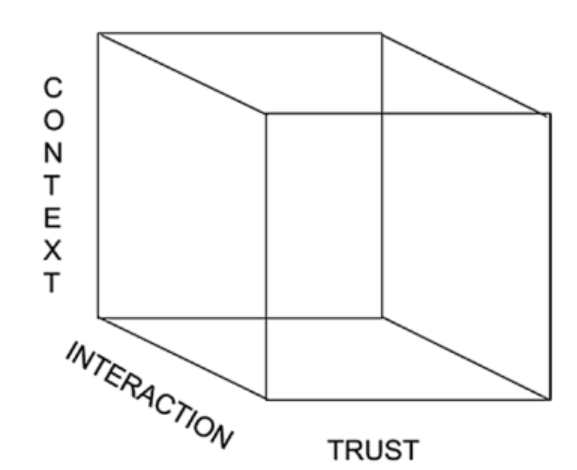
Below, we explore these three principles in greater depth.
Context
Context plays a crucial role in human-computer interaction. For AI to provide a meaningful user experience, it must be sensitive to the context in which it is operating. This means understanding the user’s environment, their preferences, and previous interactions to provide more personalized and relevant responses. AI’s ability to adapt to context is fundamental to creating engaging and useful experiences.
Interaction
The interaction between the user and AI should be designed to facilitate natural communication and engagement. This includes AI’s ability to understand and respond to natural language, allowing users to communicate as they would with another person. AI should also be sensitive to user commands and gestures, ensuring an intuitive and efficient experience.
Trust
Trust is a critical element in any relationship, including those with AI systems. Users need to trust that AI will perform its tasks accurately and reliably. To establish trust, AI must be transparent in its actions and decisions, providing clear and understandable explanations for its responses. Additionally, AI should be designed to avoid errors and be consistent in its performance.
AI systems can be programmed to use more familiar and accessible language, avoiding unnecessary technical jargon when possible. Responsiveness is another important issue, with AI systems designed to provide real-time responses and feedback, promptly recognizing user queries and actions.
With the growing adoption of AI in various areas of life, it is essential to clearly define who is responsible for AI systems and their consequences. Lack of accountability can lead to dangerous or harmful situations, especially in critical scenarios such as health and safety.
User-Centered AI Design
AI should not be developed merely because it is technically possible, but because it meets a real user need and adds value to their experience.
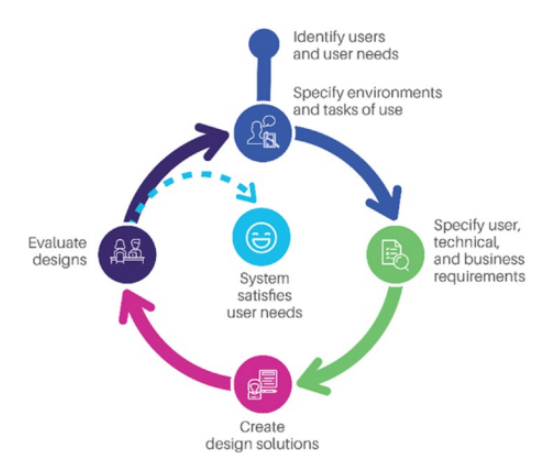
User-centered design involves deeply understanding the needs, desires, and expectations of target users. This can be achieved through extensive research, such as user interviews, focus groups, and analysis of existing data. By understanding users, their contexts, and tasks, AI developers can create solutions that are truly useful and meaningful.
Another important aspect is multidisciplinary collaboration. The team developing AI should be diverse and include UX specialists, software engineers, data scientists, and other relevant professionals. Collaboration between these different areas is fundamental to ensuring that AI is developed holistically, considering both user experience and technical aspects.
User-centered AI design is not just about creating attractive interfaces. It also involves careful consideration of the social, cultural, and ethical impacts of AI. As AI continues to play an increasingly larger role in our lives, it is essential that it be developed with a humanized approach, putting user well-being first.
It is essential to continue improving AI based on user feedback and changes in needs and expectations. AI is a constantly evolving technology, and user-centered design is a continuous process that aims to ensure AI is always aligned with users’ needs and desires.
Ethics in AI
With the growing power and influence of AI in our lives, it is essential to consider the ethical implications of its development and use.
One of the main ethical challenges of AI is bias. AI systems can be trained with data that reflects biases and stereotypes present in society. This can lead to discriminatory or unfair results. AI developers have the responsibility to ensure that their systems are fair and impartial, carefully considering the datasets used in training and implementing measures to mitigate undesirable biases.
Another ethical issue is data privacy. AI systems generally require large amounts of data to train their algorithms and provide accurate results. AI developers must ensure that user data is handled with care and protected against unauthorized access or misuse.
Furthermore, AI can have significant implications in the job market. AI-driven automation can lead to the replacement of traditional jobs by machines, raising questions about unemployment and professional retraining. AI developers must carefully consider the social and economic impact of their technologies and work to find solutions that minimize negative impact on society.
As AI becomes increasingly autonomous and capable of making decisions on its own, the question of who is responsible for its actions arises. AI developers must ensure that their systems are designed to be accountable and that decisions made by AI can be explained and justified.
Users should be informed about how AI works, how it makes decisions, and how their data is used. Transparency is fundamental to building trust and allowing users to make informed decisions about AI use.
Finally, AI developers must consider not only technical aspects, but also the social, ethical, and political implications of their technologies. Collaboration between ethics specialists, social sciences, and AI development is essential to ensure that AI is used for the benefit of all humanity.
The Future of AI and User Experience
AI is a constantly evolving field and its impact on society will continue to grow in the coming years.
One of the future trends of AI is its integration into virtually all aspects of our daily lives. From virtual assistants on our smartphones and smart home devices to complex AI systems in sectors such as health, transportation, and finance, AI will become even more pervasive. User experience will play a fundamental role in this integration, ensuring that AI is useful, accessible, and understandable for all users.
AI personalization will also continue to be improved, with systems increasingly adapted to users’ individual preferences and needs. This will make AI more efficient and useful, while creating challenges regarding privacy and responsible use of user data.
Another future trend is the advancement of explainable AI. With the increasing complexity of AI systems, understanding how they make decisions will become essential. Users will demand clear and understandable explanations about AI’s actions, especially in critical applications such as health and safety. Developing AI systems that can explain their decisions will be an important focus to ensure user trust in technology.
AI will also continue to evolve toward general AI, that is, systems that can learn and perform tasks across multiple areas, rather than being restricted to specific tasks. This evolution will create new opportunities and challenges for user experience, as more comprehensive systems will need to be designed to meet different needs efficiently.
Regarding user experience, it will become even more crucial in the future of AI. As technology becomes more complex, the user interface will play a fundamental role in facilitating interaction between users and AI. Intuitive and friendly interfaces will become a standard requirement, and UX professionals will play a fundamental role in creating these experiences.
Furthermore, ethics will continue to be a central theme in AI development and use. Issues related to bias, privacy, responsibility, and transparency will remain at the center of discussions, and the search for ethical solutions will be essential to ensure that AI is used for the good of society.
We conclude by highlighting the importance of continuous collaboration between AI and UX professionals to create AI products and services that are truly effective and user-centered. As technology advances, it is essential that the two disciplines work together to face challenges and take advantage of the opportunities that AI offers.
Final Considerations
We present a comprehensive and valuable view on the relationship between AI and user experience. Exploring fundamental concepts such as user-centered design, AI ethics, and the future of technology, it offers a holistic perspective on how to ensure that AI is developed and implemented effectively and responsibly.
AI is revolutionizing the way we interact with technology and how it affects our daily lives. Ensuring that this revolution is user-centered is essential to maximize the benefits of technology and minimize its potential risks.
At the center of all this is the collaboration between AI and UX specialists, working together to create AI systems that are useful, accessible, reliable, and ethical. As technology continues to advance, it is crucial that these principles remain at the center of AI development.
About Zappts
Since 2014 in the market, Zappts supports leading brands in their markets, such as Porto, Getnet, BTG Pactual, Cateno, Ambev, Multilaser, Ultragaz, C&A and Burger King, among others. Focused on software development, especially in Front-end, UX Design, Quality Assurance and Cloud Environment Management, it acts in the planning, management, and operation of corporate digital solution development services, environment management, and knowledge transfer through information technology.
We are a reference company in creating digital experiences for users. In addition to developing innovative and fast solutions, we operate in a 100% remote model, with teams distributed across more than 18 states in Brazil.

To learn more about how Zappts can help your company, click here, and get a free assessment with our tech consultants.
Share this article
Related articles

16 set 2026
The End of Passive SaaS: Why You’ll Pay for Outcomes, Not Seats
The traditional software pricing model based on per-user licenses (seat-based SaaS) faces an inevitable decline in 2026.

09 set 2026
The Timid Autonomy Dilemma: Why Keeping AI in a Suggestion-Only Role Is Killing Your Margins
This article analyzes the financial impact of this "timid autonomy" and advocates for an urgent shift to the "Human-on-the-loop" (HOTL) model.

02 set 2026
The "SaaSocalypse" is actually an architecture and identity crisis.
This article reverse-engineers a real-world success story (anonymized) from the financial sector, dissecting the layers of...