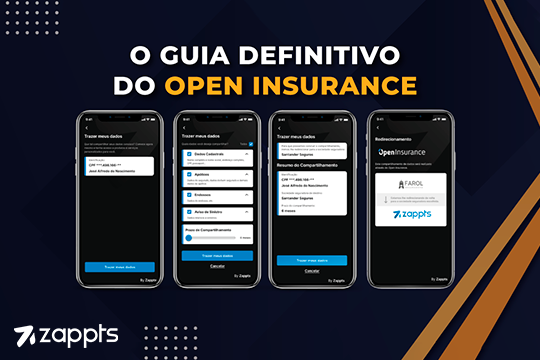
The Definitive Guide to Open Insurance
Open Insurance: how it is reshaping the insurance sector in Brazil.
1 de dezembro de 2021
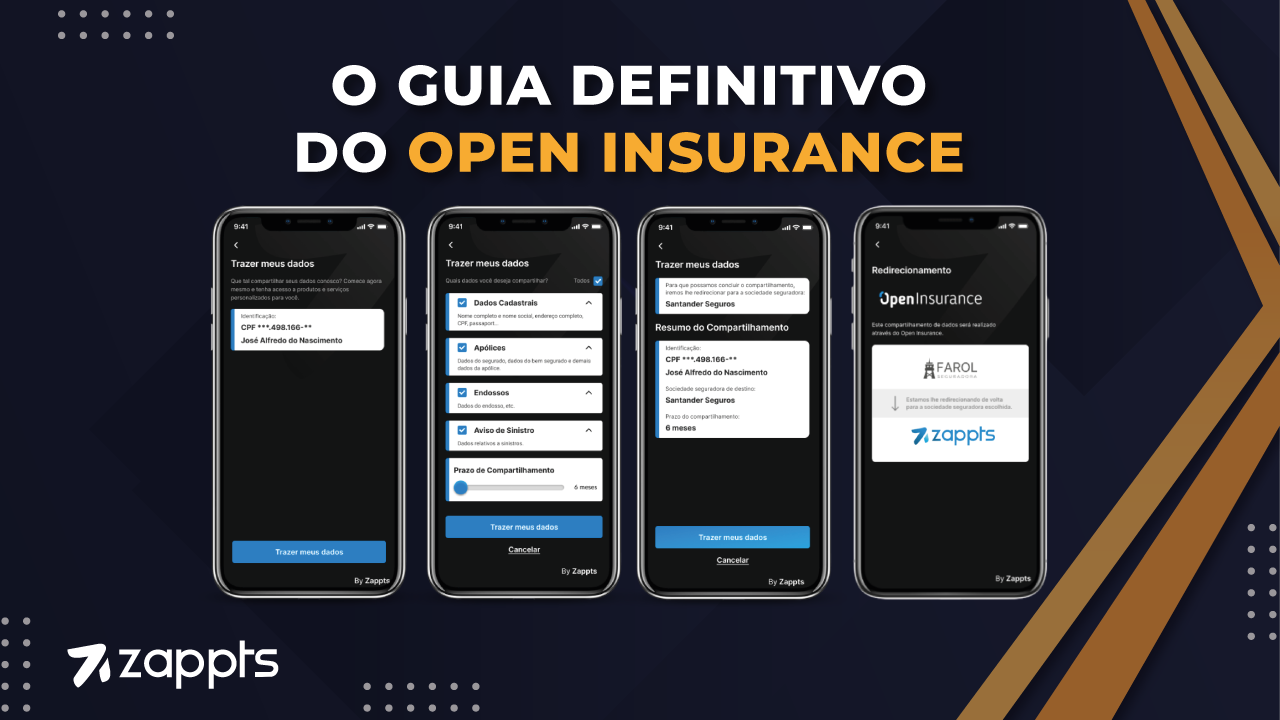
Open banking, open finance, open insurance, open health, open data, open everything. Yes, you have probably come across these terms that until recently did not exist and, certainly, you are or will be directly impacted by the changes that such “opens” propose.
This article aims to break down the concept of Open Insurance, presenting its greatest challenges, the value it generates, the advantages for consumers and insurance companies, but also the criticisms of open insurance, the concept of figital and what user experience (UX) has to do with all of this.
“In an increasingly digitalized world, whoever has the data is king”. Or, “against data, there are no arguments”. These and other phrases, adapted from popular sayings, summarize well how digital transformation has changed our relationship with our information and personal data.
What is Open Insurance?
Through data analysis, it is possible to create predictive models of almost everything imaginable, anticipating consumption behaviors, environmental crises or even elections, for example.
In this context, “open everything” was born, or “open any market segment”. According to SUSEP – Superintendência de Seguros Privados, Open Insurance, or the Open Insurance System, “is the possibility for consumers of insurance, open supplementary pension and capitalization products and services to allow the sharing of their information between different companies authorized/accredited by Susep, in a secure, agile, precise and convenient manner. To deliver these benefits to the consumer, Open Insurance operationalizes and standardizes the sharing of data and services through the opening and integration of systems, with privacy and security.”
Well then! Based on the concept of SUSEP, an autarchy of the Brazilian Federal Public Administration responsible for the authorization, control and supervision of insurance, open supplementary pension, capitalization and reinsurance markets in Brazil, and responsible for implementing Open Insurance in the country, we can glimpse, even if superficially, the quantity and depth of challenges for implementing such a project.
What are the phases and deadlines for Open Insurance?
Phase 1 – Open Data: Insurance companies share their data
The first phase was called by SUSEP as “Open Data”, a moment when insurance companies need to share data from their service channels, products and services offered to consumers.
According to information from the Open Insurance Brasil website, with this phase it is already possible to compare products and services from each of the companies in the insurance sector.
The 1st phase of Open Insurance began in December 2021 and ended in June 2022.
Phase 2 – Sharing of personal data: Insured share customer data
In the 2nd stage of Open Insurance, insurance company customers will have the possibility to share their data with other insurance companies, if it is of interest to them. Similar to banking apps, where it is possible to share data with other institutions, in Open Insurance this process will be quite similar. This will be the moment for insurance companies to watch the digital consent journey of customer data, and it is fundamental that the insurance companies’ touchpoints (websites, apps, etc.) are prepared to carry out the consent process.
With this, insurance companies will be able to offer new insurance solutions that are much more personalized than before, as they will have access to customer data, thus generating hyper-customized proposals for the public.
The forecast for the start of the 2nd phase of Open Insurance is September 2022 until June 2023, but everything suggests that these deadlines may possibly be extended.
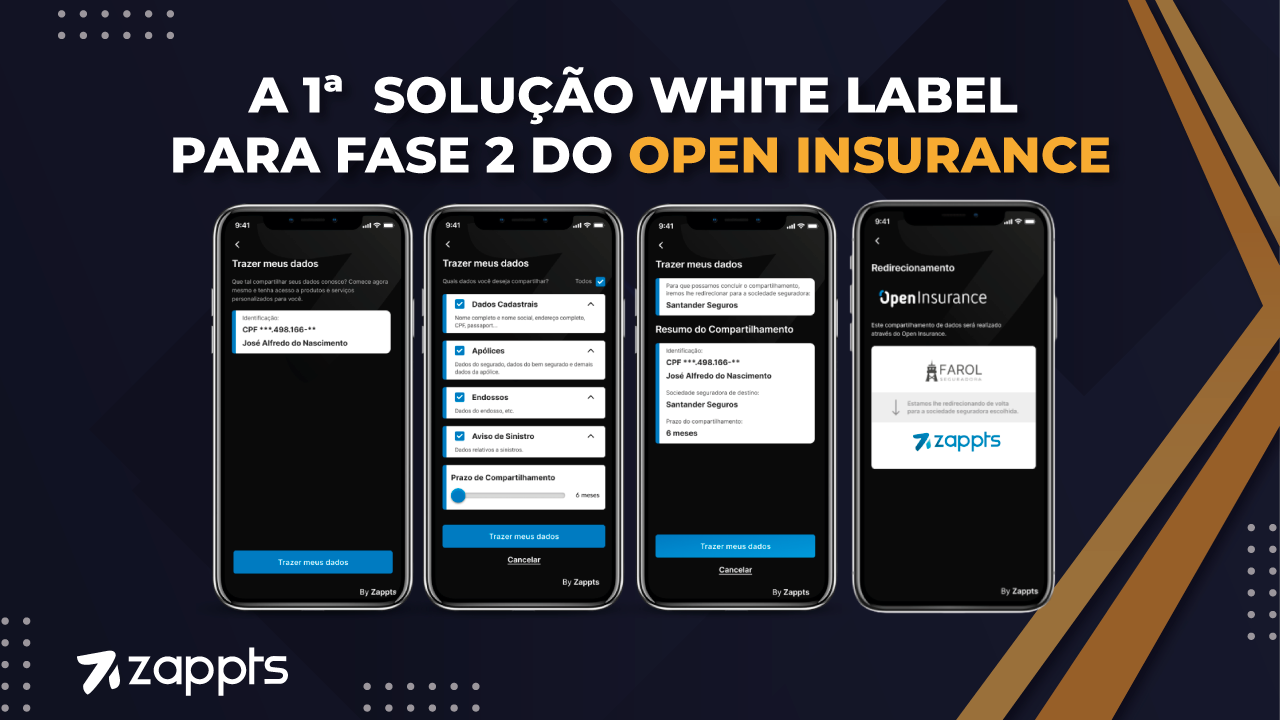
Solutions such as the whitelabel front-end Open Insurance from Zappts support insurance companies in carrying out the adaptation and shortening of the adaptation journey to phase 2 of Open Insurance. More information about this solution can be found here.
Phase 3 – Sharing of services
Once the data of insurance companies and their customers has been shared, phase 3 of Open Insurance begins. At this moment, consumers who have given consent for data sharing will have access to insurance services and products personalized for their consumer profile. In other words, this is when Open Insurance will actually work in practice. Furthermore, with consent for data sharing, customers will be able to port their account between insurance companies.
With a start forecast for December 2022 and an end in June 2023, Open Insurance will be 100% implemented in national territory.
The 3 main challenges of Open Insurance in Brazil:
- Data security and protection. The General Data Protection Law (LGPD), which regulates personal data processing activities (and amended articles 7 and 16 of the Civil Internet Framework), is still in the implementation phase by companies and public institutions. Ensuring the security and protection of insurance users’ personal data will certainly be a challenge for implementing the project in the national territory. This includes, for example, ensuring that customer data is secure and only shared with consent;
- Data mapping and system integration. If you are in the technology world, you know very well the importance of a good API and middleware services. Roughly speaking, and respecting the poetic license, systems speak different languages, store different information in different ways and in different locations. Therefore, standardizing such information and integrating systems so that all insurance companies operating in Brazil can communicate effectively are huge challenges. Data mapping is one of the great challenges for implementing this ecosystem in the country since, currently, insurance customer data is scattered across various legacy systems in each insurance company;
- Meeting deadlines. Time is indisputably the most valuable asset in the world. You cannot buy time or store it. The implementation of the Open Insurance ecosystem, according to the SUSEP website, is divided into 3 stages, each with their respective deadlines. In the first phase, called “open data”, the deadline ends in June 2022. Then we have phase 2, “sharing of personal data”, with a deadline for June 2023. Finally, we have phase 3, “services”, also with a deadline for June 2023, which would ensure that the open insurance ecosystem is completely implemented. However, there is great concern on the part of insurance companies about meeting these deadlines. The request for a change of deadline has already been made by some companies, however without success, but with the expectation that SUSEP will yield and extend the existing deadline, and it is real.
Why is Open Insurance important?

After conceptualizing “open insurance” and presenting the main challenges for its implementation, it is time to understand why Open Insurance is important, and what value it brings to society.
The digitalization process in general shortens consumption journeys, optimizes the cost-benefit ratio and generates business intelligence thanks to the correct use of data. In the insurance area, it would be no different.
With the implementation of Open Insurance, the insurance area will improve the cost-benefit ratio of operations, bringing greater agility, security and transparency to the insurer-customer relationship. If signing a contract previously took about 15 days on average, in the digital environment this can take just a few hours, or even less.
Therefore, the simpler your offering process is and the better the user’s experience with the insurance company’s system, the higher the probability of conversion, that is, of a new customer.
On the other hand, the technology behind it must offer infrastructure capable of processing a very high volume of data with agility, fluidity and with fewer and fewer friction or errors.
In other words, technology will play a fundamental role in the innovation of the sector and throughout the customer’s purchase (and repurchase) journey.
Advantages of Open Insurance for consumers:

By now you already understand the concept of Open Insurance, its main challenges, and have also been able to see some of the benefits for customers and insurance companies with the implementation of this ecosystem.
We list below, in a summarized way, some of the advantages of Open Insurance for insurance consumers:
- Greater clarity about which personal information is being exposed and shared, as well as the manner in which such information is being exposed;
- The consumer will have greater autonomy when choosing (or canceling) insurance. Through a consultation panel with all insurance information, prices and conditions, the customer will have greater ease in making decisions (provided that insurance companies expose such information in the most friendly and intuitive way possible, facilitating the user experience);
- Insurance that is increasingly cheaper and of higher quality. With information transparency being one of the main pillars of Open Insurance, competition between insurance companies will increase, and consequently the fight to improve their services, brand experience and insurance values will be some of the competitive differentiators that may attract or repel customers.
Advantages of Open Insurance for insurance companies:
Right! And for companies? What will be the advantages for insurance companies with the implementation of Open Insurance? We answer below:
- Greater competitiveness among insurance companies can also be seen as an advantage for insurance companies. Where there is competition, there is also a greater effort to improve the quality of service provided and guarantee competitive differentials that are perceived as positive by customers. Based on the insights offered by competitive analysis, thanks to information transparency, insurance companies will be able to improve their products and services, in addition to reducing their costs;
- Data that becomes information, which in turn transforms into knowledge, and which, when well applied, generates competitive differentials. By studying the information released by customers, insurance companies will also be able to create new products, services and business models, expanding revenue that previously was composed only of “shelf products”;
- Less dependence on insurance brokers and physical stores. What for some may be seen as negative, for others may be seen as positive. With digitalization, the need for physical spaces decreases, and consequently the operating costs of insurance companies are also reduced. Furthermore, with a digital system focused on user experience, insurance consumers will have greater autonomy, not necessarily needing the help of insurance brokers.
Well then! Since we talked about insurance brokers, we ask ourselves:
What is “Figital” and what does it have to do with Open Insurance?
Here we present the concept of Figital, which is basically the union of the word “physical” with “digital” (creative, isn’t it?!). The concept of Figital can be applied to the most diverse market segments, to different business models that use physical and digital environments to promote their value proposition. In this way, customer service, for example, can be carried out in both environments.
Figital will be the trademark of the Open Insurance business, as the broker will be at the center of analyzing the best product for their client, as well as continuing to assist in case of claims, but also in monitoring the customer’s journey from contracting the policy to renewal, including necessary modifications during this period.”
But is that really the case? Will insurance brokers still have a place in this digitalized environment? Will customers need brokers to contract or cancel their insurance services?
Certainly yes, but with reservations that can only be seen once the entire Open Insurance ecosystem is completely implemented.
What are SISS in Open Insurance?

It is the Insurance Service Initiating Society, already regulated and available since November 2021 for accreditation of interested parties with Susep. According to the Director of Susep, Vinícius Brandi, “SISS are a fundamental component of Open Insurance that, together with the other members of the insurance market, will bring more innovation and efficiency to the sector through new technology solutions and the use of shared data that will be responsible for the emergence of new services and products that best meet consumers’ needs.”
A CNSP Resolution nº 415/2021 determines that they are participants of Open Insurance and brings the following concept of one of the societies present in this new system:
- Insurance service initiating society: a corporation, accredited by Susep as a participant of Open Insurance, that provides data aggregation services, information and control panels (dashboards) or, as a representative of the customer, with consent given by them, provides transaction initiation services, without at any time holding the resources paid by the customer, except for eventual remuneration for the service, or received by them.
The superintendent of Susep, Solange Vieira, believes that the changes will bring great advantages to the various market players: insurance companies, brokers and consumers. “SISS appears in the Open environment as a service provider that has long been used by the insurance market – Insurtechs. The big difference is that SISS is required to operate in an “open” environment and interconnect all players, without restrictions or choices,” she explains.
What is the purpose of SISS?
To contribute to the expansion and efficiency gain of the market, aggregating data that can be used for the development of new products.
Who can become an SISS?
In Susep’s proposal, insurance companies, brokers and agents can become SISS, for which they will need to meet some accreditation requirements, such as:
- Sign an adhesion term with Susep;
- Meet financial requirements: Have a minimum net equity of R$1,000,000.00;
- Meet requirements related to governance, data and information confidentiality and cybersecurity in accordance with CNSP Resolution nº 416/2021, PLD/FT and LGPD)
- Meet requirements related to conduct practices and adequate customer treatment in accordance with CNSP Resolution nº 382/2020
- Ensure Susep integral access to information maintained by it or by third parties contracted by it to carry out its activities.
On the other hand, SISS are not allowed to:
- Retain any insurance risks;
- Operate open supplementary pension plans;
- Issue capitalization titles.
SISS and Open Banking
SISS can also be accredited as payment transaction initiating institutions, under the terms of the Open Banking regulation. In this hypothesis, the minimum net equity required by SUSEP must be complementary to that required by the Central Bank of Brazil.
Supervised societies participating in Open Insurance (Insurance company, open supplementary pension entity or capitalization society) may provide initiation services independently without needing accreditation, only needing to communicate to SUSEP their intention to provide this service 90 days in advance.
The accreditation of an SISS must be renewed at least every 5 years. Now, regarding the suspension and cancellation of accreditation:
Accreditation will be cancelled if:
- Proven losses to customers occur;
- Non-compliance with the requirements set forth in art. 14 or in Annex I;
- Existence of evidence of illicit practice through fault or fraud;
- Relevant or repeated non-compliance with the requirements established in this Resolution;
- falsehood or serious omission in the declarations or documents presented in the process instruction;
- Situations that may affect the reputation of the SISS or its administrators;
- Failures or violations in the cybersecurity and data protection system; or
- Any act, omissive or commission, that contravenes law or infra-legal regulation, that is considered a harmful act.
Accreditation will be suspended if:
- The SISS may have its accreditation suspended, precautionarily, in case of imminent risk or harm to customers or when, after notification from Susep, the society fails to implement necessary corrective measures or does not suspend practices that conflict with the requirements established in the applicable legislation.
About PDL n.1073/21
A legislative decree project (PDL n.1073/21) was filed on 11/24/2021 that revokes Resolution 429/21, of CNSP, of November 12, 21, which establishes the requirements for the accreditation and operation of insurance service initiating societies (SISS) within the scope of the Open Insurance System (Open Insurance).
Criticisms of Open Insurance
By now you must be thinking that Open Insurance is a bed of roses. However, like almost everything in life, we can analyze it from a more critical point of view. Below, we list some criticisms of Open Insurance raised by stakeholders impacted by this change:
- Although it shows itself favorable to the Open Insurance model, the National Confederation of Insurance Companies (CNSeg), which encompasses more than 180 companies and service providers in the segment, criticizes the deadlines and rules stipulated by SUSEP. The entity believes that the one-year interval for company adaptation is not sufficient to handle the changes in technology, systems and internal governance necessary to protect user data in the context of Open Insurance.
- As we saw earlier, there is still a gap to be filled regarding the role of insurance brokers once Open Insurance is implemented.
- Greater competitiveness, but with fewer players. Will all insurance companies, even small and medium-sized ones, have the financial and procedural capacity to implement the details of Open Insurance? Maybe not, maybe yes.
- Dependence on digital space. Unfortunately, not all people have access to information technologies, and many are not familiar with digital systems. Will Open Insurance be more inclusive or will it become increasingly exclusive?
The importance of User Experience (UX) in Open Insurance

Right! But where does user experience (UX) fit into all of this? Let’s go! Responsible for the interaction between an individual and a digital product, service or brand, User Experience (in Portuguese, Experiência do Usuário) is a concept that has become indispensable in digital applications and businesses.
The concept was born in the 90s and was created by Donald Norman, while working at Apple.
The idea of UX encompasses the entire customer journey with a product or service, from the first contact with the brand, through consumption, and reaching post-purchase.
Therefore, the user experience, as the name itself suggests, focuses entirely on the user’s perception and usability. Intuitive digital platforms, easy to use, that induce certain user behaviors desired by the company (such as the purchase of a certain product, or clicking on a certain button), are the ones that survive.
In the insurance market, and in all sectors impacted by digital transformation, concern about user experience will be increasingly relevant for achieving companies’ strategic objectives.
Insurance companies that offer the best experience with their digital products will certainly have a great competitive differentiator by their side that can determine success or failure with the changes of Open Insurance.
The SUSEP User Experience (UX) Guide
In May 2022, SUSEP made publicly available the Open Insurance User Experience Guide, a guide that defines the specifications regarding the customer experience within the scope of Open Insurance, for carrying out the data sharing journey in the environment. Compliance with the provisions of the guide is mandatory for participating societies.
Considering the objective of compatibility between Open Finance and Open Insurance, the guide was built in a way to maintain a homogeneous data sharing journey, based on interoperability between the environments.
Zappts has developed a whitelabel front-end Open Insurance solution that takes into consideration all the guidelines of the SUSEP User Experience Guide, in order to support insurance companies in carrying out the adaptation and shortening of the adaptation journey to phase 2 of Open Insurance. More information about this solution can be found here.
Forecasts for Open Insurance in 2024
Although we are already beginning to observe how Open Insurance is moving the insurance sector, executives say that it is only in 2024 that we will see this impact happening in a truly significant way. This is due to the need for adaptation and investment coming from the market and also from customers.
According to a study by consulting firm Capgemini shared exclusively with the Jornal O GLOBO, most executives expect Open Insurance to start impacting the sector only in 2024.
One of Capgemini’s partners in preparing the study, Francisco Galiza, highlights that beyond this need for investments, the research also shows that society’s and market professionals’ knowledge about Open Insurance is still low, which will make the impact horizon longer.
“A clear challenge is knowledge, we asked companies about what level of knowledge they have regarding Open Insurance and it is very low. There is a whole cultural trajectory regarding this, a compliance trajectory, regulatory, people adapting and this is a medium and long-term trajectory,” said Galiza.
Roberto Ciccone, vice-president for Financial Services at Capgemini Brasil, believes that more competition would result in more competitiveness, but highlights that price also depends on other factors: “We see out there in Open Banking, the differentiated value, from personalization to advisory, in the end price becomes secondary. Price has not been proven, even executives don’t think the premium will necessarily drop, profit should be maintained, they are confident that either they sell more expensively or reduce cost.”
Brazil’s 1st Open Insurance Solution is from Zappts
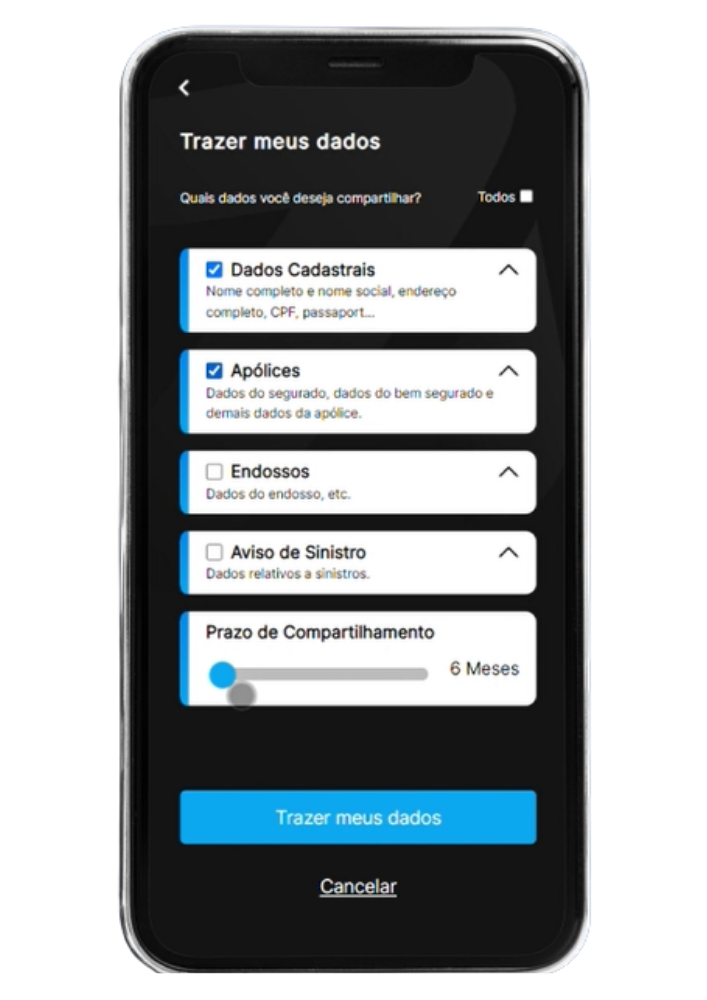
Zappts, a technology company that develops digital solutions for major brands, announced the first Open Insurance solution in Brazil. The launch is considered the first step for insurance companies to adapt to the transition process required by the new regulation, quickly and securely, and be ready to serve their customers within the established deadline.
Zappts’ Open Insurance product is focused on the user’s digital experience journey, so that insurance companies can collect customer consent regarding data sharing. In other words, it is a product that, through the digital experience and journey, done through a responsive and customizable web application, allows shortening the adaptation journey of insurance companies in Open Insurance.
Rafael Tiba, CEO of Zappts, explains that the product was developed especially to comply with Susep CNSP Regulatory Standard No. 415/2021, which deals exclusively with Open Insurance:
“We studied the regulatory standard and Open Banking experiences to bring a solution that allows the entire data sharing consent journey to be done legally, providing the end user with a simple and easy-to-use experience,” he comments.
From the launch, the end user can, at any time, simply edit which data is shared with insurance companies, thus bringing practicality and transparency to the insurer-insured relationship.
Furthermore, the Zappts solution is also 100% aligned with the new demands proposed in the General Data Protection Law (LGPD) and in the Open Insurance User Experience Guide developed by SUSEP.
So far, Zappts is the only company in the country to announce a ready-made product on this topic. Any insurance company can already verify it, including requesting its immediate use.
Rafael Tiba acknowledges that, probably, other companies may develop similar products in the coming months, but believes that Zappts has a qualified team to handle the subject:
“We should see other players presenting solutions very close to ours, since we are the first to launch this in the market, it is natural, but they will hardly have all the sector know-how that we have and the open insurance challenges that we learned to overcome,” he highlights.
The product follows, from the beginning, the usability guidelines that ensure that insurance company customers have a good experience on the platform, as well as insurance companies can quickly adapt to the legislation.
Zappts’ motivation in creating its own Open Insurance product was to provide customers with a practical and quick implementation solution for the legislation, so that they could meet the regulation deadlines, ensuring that their users had the best digital experience with data sharing.
Rafael Tiba comments that, because the company has insurance sector clients in its portfolio and they constantly need to study about “opens” (banking, insurance, health, etc.), it was possible to develop the Open Insurance product in a short time.
To learn more about the Zappts Open Insurance solution, click here.
Conclusions
To finalize this article, we arrive at the following conclusions, separated into topics:
- Information security is the main concern of stakeholders when we talk about Open Insurance;
- The insurance market in Brazil is still small when compared to other countries, therefore, with Open Insurance, there is an expectation that there will be growth in the insurance market, an increase in customer adhesion.
- There are many challenges to be completed before that: Open Insurance is still not fully structured. There are doubts about how brokers will fit in, there is a lack of more concrete definition of the roles of SISS (Insurance Service Initiating Society) and what they actually are;
- SUSEP has not yet made available customer service channels for insurers to resolve doubts;
- Phase III is a poorly detailed phase, and SUSEP was unable to release comprehensive content like Bacen did with Open Insurance, and with this, insurance companies still do not have clarity on everything they need to do, and how to do it;
- There is an expectation and desire on the part of insurance companies that the deadlines be changed, however, SUSEP does not guarantee this change and has already denied it several times.
- The experience that users have on digital platforms dictates the success or failure of a business, and with insurance companies migrating to Open Insurance it will be no different. Insurance companies that guarantee the best digital experience for their users will guarantee a larger customer base and consequently greater revenue and sustainability over the years.
About Zappts
With 7 years in the market, Zappts carries out the digital acceleration of major brands such as Porto Seguro, Getnet, BTG Pactual, Cateno, Ambev, Multilaser, Ultragaz, C&A and Burguer King, among others. Focused on software development, especially in Front-end, UX Design, Quality Assurance and Cloud Environment Management, it works in the planning, management and operation of corporate digital solution development services, environment management and knowledge transfer through information technology. A reference in creating digital experiences for users, in addition to developing innovative and rapid solutions, the company operates in a 100% remote model, with teams distributed across more than 18 states in Brazil. Learn more at: https://qa.zappts.com.br/
Share this article
Related articles

16 set 2026
The End of Passive SaaS: Why You’ll Pay for Outcomes, Not Seats
The traditional software pricing model based on per-user licenses (seat-based SaaS) faces an inevitable decline in 2026.

09 set 2026
The Timid Autonomy Dilemma: Why Keeping AI in a Suggestion-Only Role Is Killing Your Margins
This article analyzes the financial impact of this "timid autonomy" and advocates for an urgent shift to the "Human-on-the-loop" (HOTL) model.

02 set 2026
The "SaaSocalypse" is actually an architecture and identity crisis.
This article reverse-engineers a real-world success story (anonymized) from the financial sector, dissecting the layers of...