
The role of the Customer Data Platform (CDP) in the free energy market
Brazil is undergoing a change in the way energy is commercialized, with a migration from a Captive Market to a Free Market. Understand how a CDP can optimize your customer data management in this new scenario.
24 de abril de 2023
Introduction
Brazil is undergoing a change in the way energy is commercialized, with a migration from a Captive Market to a Free Market. In the Free Energy Market, participants have the opportunity to freely negotiate all commercial conditions, such as supplier, price, amount of contracted energy, supply period, payment, among others, in a highly competitive environment for electricity negotiation. Additionally, consumers have the freedom to acquire energy from sources other than those offered by the local concessionaire, making this negotiation environment a relevant alternative in the Brazilian energy sector.
Undoubtedly, the energy sector in Brazil is one of the most important for the country’s economy. It is responsible for providing energy for all types of businesses, residences and institutions, maintaining the quality and safety of supply. However, the industry faces growing technological challenges that affect efficiency and innovation capacity, in addition to legal changes, such as the free energy market. With such changes, technology leaders in the sector see the need to optimize customer data management, which can be resolved with the correct implementation of a CDP (Customer Data Platform).
What is a CDP?
A Customer Data Platform (CDP) is a platform that allows collecting and managing customer data in real time from multiple sources, consolidating them into a single customer profile. It is designed to help companies better understand their customers and, consequently, make more informed and personalized decisions regarding the company’s business.
A CDP is an evolution of customer data management systems (CDM) and offers more resources to handle large volumes of data, integrate multiple data sources and provide actionable insights in real time. The use of a CDP can bring many benefits to the Brazilian energy sector, especially with the transition to a free market.
Does the Brazilian energy industry know its consumer?
One of the main benefits of a CDP for the energy sector is the ability to obtain a complete view of the customer. The energy sector is highly regulated and complex, with many companies providing services to the same customers. Therefore, it is essential to have a deep understanding of each customer’s profile, so that companies can personalize services and offer customized and quality service. With a CDP, energy companies can consolidate data from various sources, such as websites, mobile applications and transactional data, into a single customer profile in real time.
Free market and competition in the Brazilian energy market
According to a study released by the Câmara de Comercialização de Energia Elétrica (CCEE), in 2020 there were more than 1,500 companies authorized to commercialize electricity in the Free Contracting Environment (ACL), serving more than 8,300 legal consumers throughout Brazil.
The number of ACL users grew about 22% compared to the previous year, according to CCEE. Although most consumers are concentrated in São Paulo, Pará, Espírito Santo, Minas Gerais, Paraná and Santa Catarina, the free energy market has been expanding to all regions of the country.
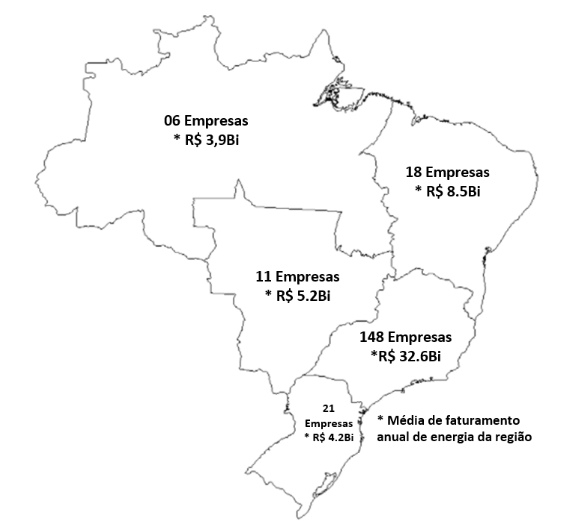
With this, energy sector companies in Brazil began to structure themselves to enter this new business, where they are currently competing with each other for a market of more than 12,000 corporate customers, which tend to grow in the coming years.
The migration of consumers to the Free Contracting Environment (ACL) grew considerably in the last 2 years, with a 20% increase in the flow of adherences. This growth points to a trend that should remain in the coming years.
Data security for energy consumers in Brazil
Another benefit of a CDP is the ability to manage and share data securely. The energy sector is highly sensitive to data security and privacy issues. A CDP can help energy companies maintain customer data security and ensure regulatory compliance. The CDP can also help energy companies share data with other energy companies and other stakeholders, such as regulatory agencies, in a secure and efficient manner.
CDP as an ally in cost reduction in the energy industry
In addition to the benefits mentioned above, a CDP can help energy companies improve efficiency and reduce costs. The implementation of a CDP can allow energy companies to automate customer data collection and analysis processes, which can reduce the time and cost required to process this data. This can allow energy companies to make faster and more informed decisions, increasing efficiency and reducing operational costs.
The challenge of system integration in the energy industry
One of the main challenges for technology professionals in the Brazilian energy sector currently is the integration of new solutions with existing legacy systems. Many energy companies use legacy systems to collect and manage customer data, which can make integration with a CDP a complex and time-consuming process. Energy companies also need to ensure that customer data is collected and used in accordance with government regulations.
Tech know-how in the Brazilian energy sector
Another challenge is the need for specialized personnel to manage and maintain a CDP. Energy companies need to have a highly qualified technical team to implement and manage a CDP efficiently. This may include engineers, scientists and data analysts, who can ensure that the platform is working correctly and that customer data is collected and analyzed properly.
Success Story: Energy sector and distributor relationship
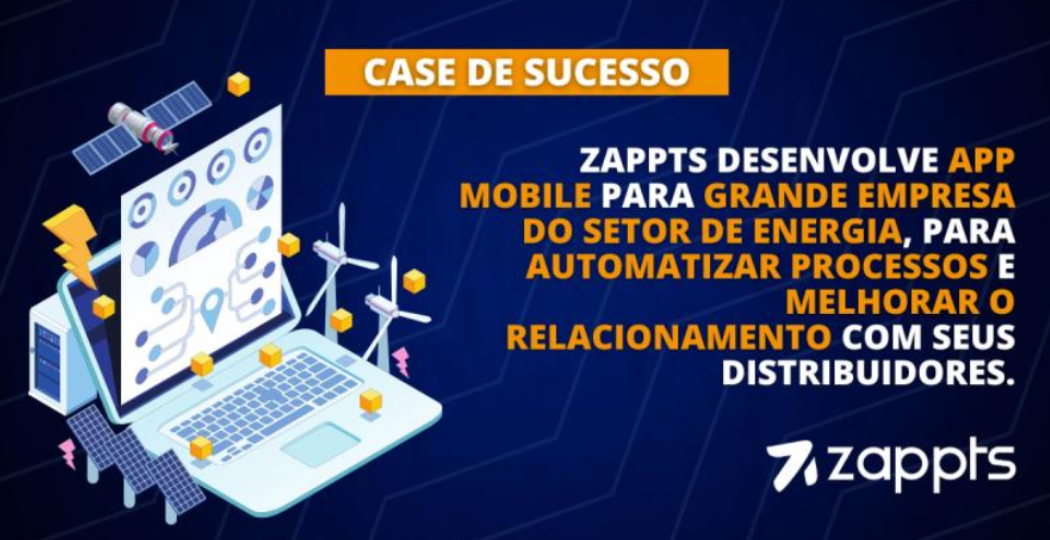
Since 2014, Zappts has helped energy sector companies generate business results through technology. To streamline processes and improve the relationship with distributors of a large energy sector company, Zappts was tasked with developing an application that reads physical materials to assess whether discounts apply to product distribution, since before, the entire process was done manually on paper and there was no guarantee of accuracy.
Challenges of implementing a CDP in the energy sector
Despite the challenges, a CDP is a valuable tool for the Brazilian energy sector. By consolidating and managing customer data in real time, energy companies can gain valuable insights about their customers, improve efficiency and reduce operational costs. In addition, a CDP can help companies maintain customer data security and ensure regulatory compliance, which is fundamental for the highly regulated energy sector.
On the other hand, for companies in the sector that intend to make a first implementation, it is important to note that the challenges include inadequate data collection, incompatible data integration, data security, regulatory compliance, complex integration and lack of skills and resources. It is important to assess these risks and ensure that appropriate measures are taken to mitigate them.
In day-to-day operations, operating and maintaining a CDP requires observing multiple aspects, including data collection and integration, data cleaning, campaign personalization, data analysis, technology integration and regulatory compliance. It is important to have the appropriate skills and resources to overcome these difficulties and obtain the maximum benefit from a CDP.
Criteria to consider when choosing a CDP
We have separated some points that technology leaders in the energy sector need to be aware of when contracting a CDP solution:
- Complexity: Some companies may find CDPs too complex and difficult to use, especially if they have no prior experience in data management.
- Data integration: data integration can be a challenge, especially if there are several different data sources involved.
- Real-time data updates: Some companies report that real-time data updates are not as fast and effective as they would like.
- Price: some companies may find CDPs expensive compared to other data management solutions.
- Functional limitations: some platforms may have limitations in terms of functionality, which can be a challenge for companies with specific data management needs.
- Difficulty integrating with other technology solutions: there may be challenges in integrating the CDP with other technology solutions, such as data analysis tools or marketing automation solutions.
Coren CDP – Personalization at scale
Coren, a spinoff company from Zappts, is a CDP platform focused on helping technology leaders create the best customer journeys with personalized experiences. Click the image below to learn more.

Conclusion
In conclusion, the implementation of a CDP can bring many benefits to energy companies in Brazil. However, it is also important to remember that the implementation of a CDP is a complex process that presents significant challenges. Energy companies need to be prepared to deal with these challenges, ensuring that they can take full advantage of the benefits of a CDP. With the right time and investment, a CDP can become an indispensable tool for the Brazilian energy sector, helping companies improve efficiency, increase customer loyalty and stand out in a highly competitive market.
About Zappts
Since 2014 in the market, Zappts supports leading brands in their markets, such as Porto, Getnet, BTG Pactual, Cateno, Ambev, Multilaser, Ultragaz, C&A and Burger King, among others. Focused on software development, especially in Front-end, UX Design, Quality Assurance and Cloud Environment Management, it acts in the planning, management and operation of corporate digital solution development services, environment management and knowledge transfer through information technology.
We are a reference company in creating digital experiences for users, in addition to developing innovative and fast solutions, we operate in a 100% remote model, with teams distributed in more than 18 states in Brazil.
To learn more about how Zappts can help your company, click here, and get a free assessment with our tech consultants from the energy sector.
Share this article
Related articles

21 out 2026
Company Brain in the Agentic Era: The Strategic Framework for Autonomous Decision-Making in Enterprise Companies
A true Company Brain requires an architecture that arbitrates the conflict between corporate "belief" (unstructured signals) and deterministic "truth" (systems of record) through a rigorous grounding layer.

07 out 2026
The Illusion of the Corporate Brain: The 4-Layer Architecture for Safely Scaling Autonomous Agents
The corporate market is experiencing a semantic collapse. Terms like "corporate brain," "living wiki," and "organizational memory" saturate the IT ecosystem under the same premise.

16 set 2026
The End of Passive SaaS: Why You’ll Pay for Outcomes, Not Seats
The traditional software pricing model based on per-user licenses (seat-based SaaS) faces an inevitable decline in 2026.